
July 10, 2026
New features
Secure one-time links for API keys
After creating an API key in the dashboard, you can now share the secret with a one-time, time-boxed link. The link reveals the API Key one time, then it is no longer usable.
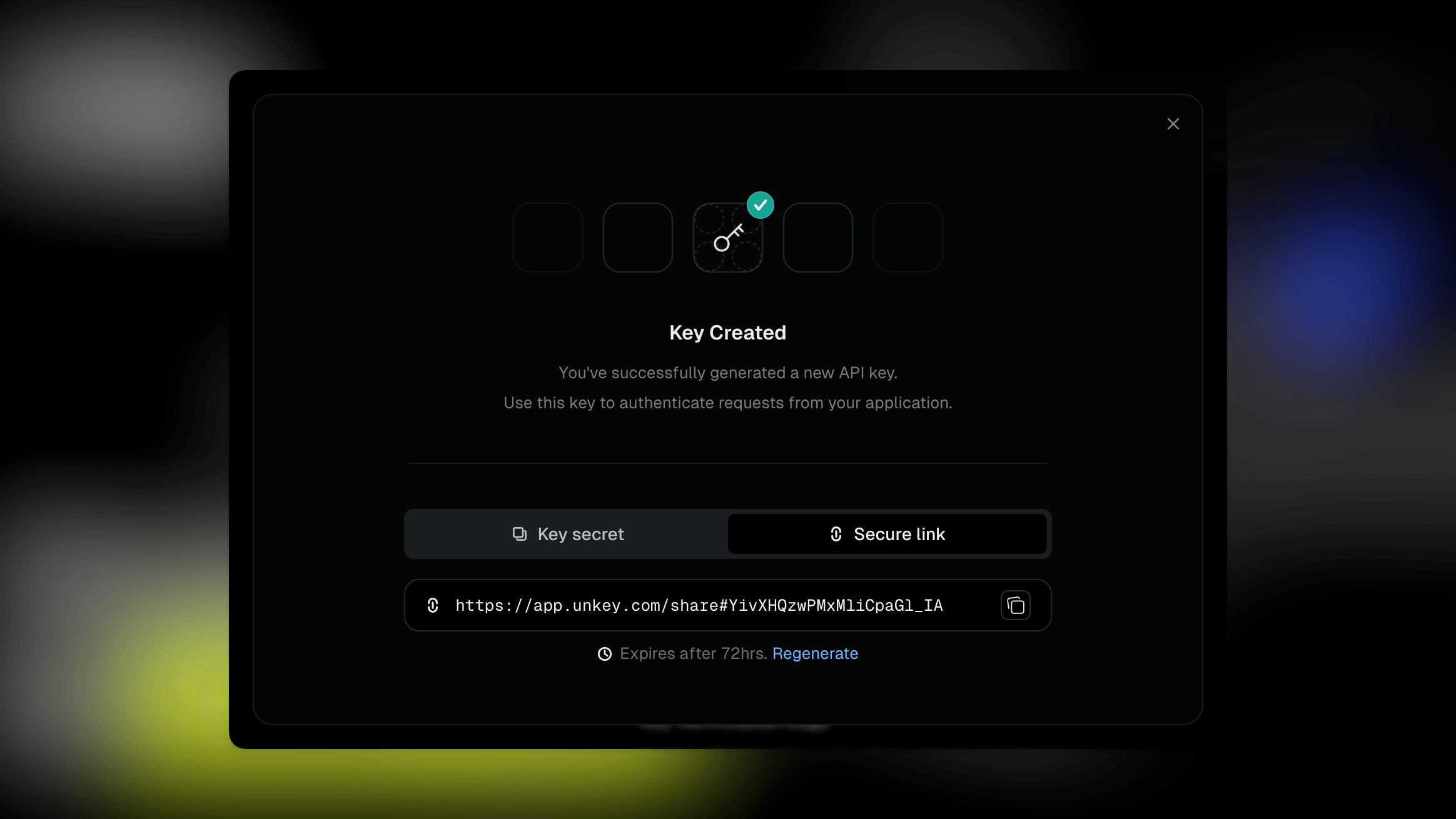
This gives you the ability to safely share keys with team members or customers.
Custom build commands
Automatic builds now support an explicit build command per environment. This is useful for
monorepos or apps that need a focused command such as pnpm --filter api build.
Add roles and permissions while creating a key
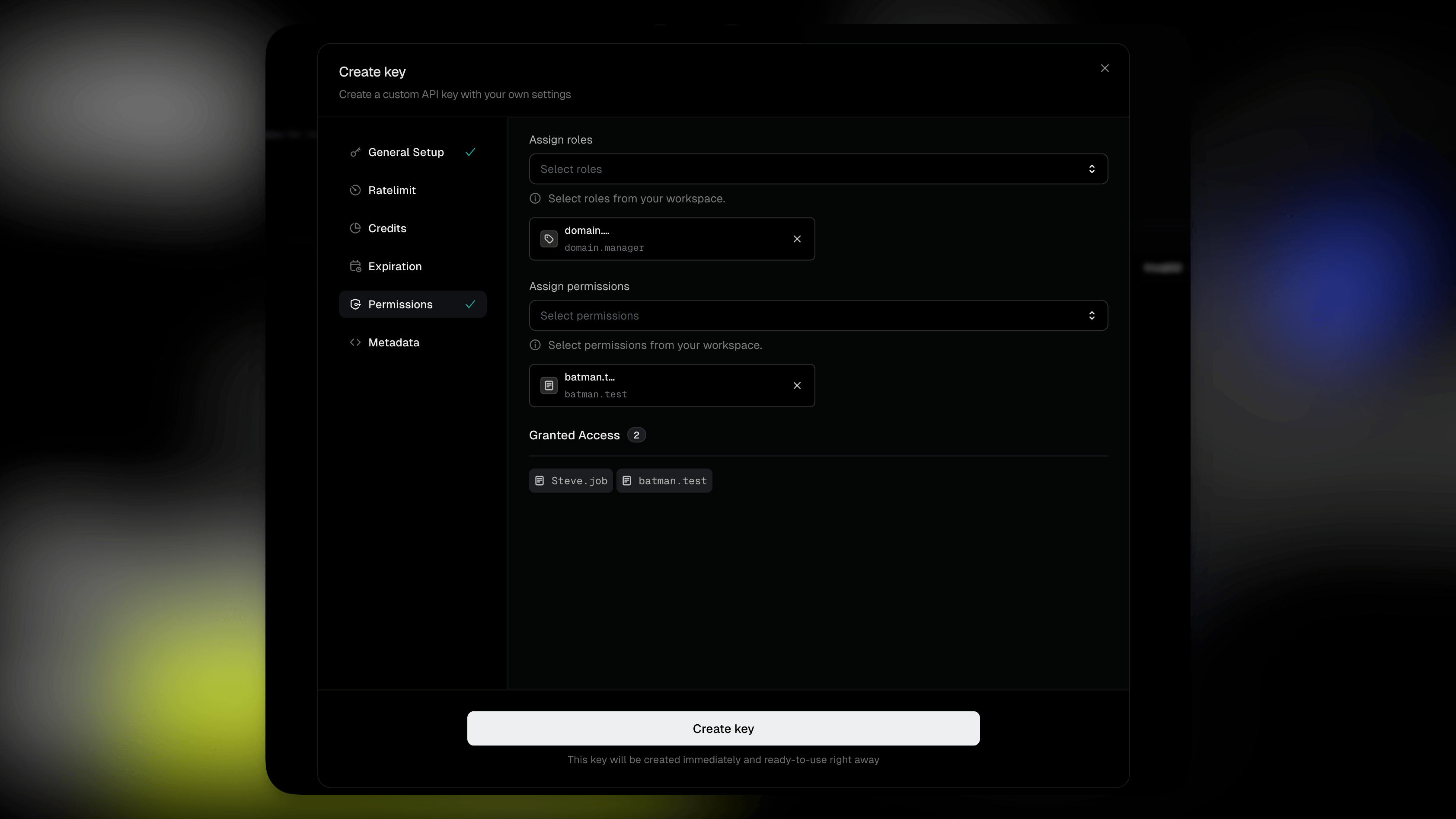
The dashboard key creation flow now lets you attach roles and permissions before the key is created. You can issue a key with the right access from the start instead of creating it first and editing it afterward.
Updates
Key management is consistent across dashboard and API
Dashboard actions for creating, updating, deleting, rotating, and editing API keys now follow the same public API behavior as programmatic key management. Existing dashboard flows keep the same shape, with more consistent validation and errors.
Gateway key authentication can enforce key rate limits
Gateway API key authentication can now enforce the named rate limits configured on a key, matching the behavior you already get when verifying keys through the API.
Bug fixes
- Non-admin workspace members can no longer rename a workspace or change billing customer details.
- GitHub app installation checks now verify ownership before connecting an installation.
- Role edits no longer risk saving an empty association state before existing keys and permissions finish loading.
- Deep-linked list pages no longer reset to the first page before data loads.
- Key creation now validates the minimum byte length before submitting, so errors appear earlier in the dashboard.
- Dashboard error toasts now show the intended human-readable message instead of raw response bodies.
- Deleted deployments and domains no longer leave background retries running.
- Custom build root directories are validated more strictly before a deployment starts.
- Ratelimit origin handling is less sensitive to tiny transient blips, reducing unnecessary fail-fast behavior.
- Security-sensitive tokens now use uniform character selection.